Portfolio Update: 4 May 2026
This post documents the past month of work across my portfolio. It is not content for its own sake, but a record of what is actually happening, offered to those supporting or following this inquiry. I welcome corrections, additions, and disagreements from anyone working in this space.
The River as a Thread
The dominant theme of the past month has been the Darent Valley, specifically, sensing into how bioregioning can emerge from the remarkable web of community groups, ecologists, artists, councillors, and advocates already organized around one of England's rare chalk waterways. The work has involved attending events, connecting with individuals, communities, and institutions, and mapping how the scattered energy around the river could cohere into something more durable.
The River Darent is a chalk stream, one of approximately 200 globally, most of which are concentrated in southern England. It rises in the Greensand Ridge above Sevenoaks, flows through Otford, Shoreham, Eynsford, Farningham, and Dartford, and eventually joins the Thames. The catchment is divided administratively between Sevenoaks District and Dartford Borough, which is precisely the governance problem I keep returning to.
Rights of the River: What Exists and What It Lacks
In 2025, Green Councillor Laura Manston secured a motion in Sevenoaks District Council to recognize the rights of the River Darent within the district. It was a meaningful first step, and the model is now being picked up by Dartford, where Green Councillor Laura Edie is running a comparable campaign for the lower Darent.
My honest assessment is that the existing motion is structurally weak. It contains no enforcement mechanisms, no criteria for determining when rights have been violated, and no institutional body empowered to act as the river's guardian. In practice, the council is asked to "take into consideration" the river's rights when evaluating planning applications, without any definition of what that means or how compliance would be measured. The motion does not confer legal personhood on the river, which remains the standard to which the most effective rights of nature frameworks aspire. The Whanganui River in Aotearoa New Zealand is the reference point for what legal personhood actually entails, including designated guardians with standing to litigate on behalf of the river and institutional architecture to enforce the rights in question. The Dartford motion risks inheriting these limitations.
Furthermore, two separate district councils organizing independently around a single catchment is not bioregional governance. The relevant unit of care is the whole watershed, from the Greensand springs to the Thames confluence, including the Cray and other tributaries.
While researching existing initiatives, I encountered the Catchment Based Approach (CaBA), a national framework through which South East Rivers Trust coordinates water stewardship in the Darent and Cray catchments. The CaBA story map documents substantial work already done, but CaBA is primarily a management and consensus-building framework, oriented around negotiating with water companies, local authorities, and landowners within existing regulatory structures. It is not, in its current form, a bioregional governance model. It does not hold the more-than-human framing, the long-horizon thinking, or the legal infrastructure that effective rights of the catchment ecosystem would require. How the two approaches relate, whether CaBA can serve as a foundation to build from, a partner to work alongside, or something to transform from the inside, is an open question I am actively exploring with the South East Rivers Trust team.
What is needed is a catchment-scale structure with legal authority, ecological monitoring capacity, and genuine enforcement mechanisms across the entire system. The infrastructure I have in mind draws from Bioregioning Tayside's model, developed in collaboration with Dark Matter Labs. Their catchment trust combines a bioregional learning center, ecological health and metabolic flow monitoring infrastructure, and a bioregional financing facility within a single capital trust. This architecture would give the River Darent rights legislation what it currently lacks, specifically a defined guardian body, measurable ecological health indicators, and the means to direct resources to the groups already doing restoration work.
I also plan to work more closely with Lawyers for Nature on what enforceable rights of the catchment ecosystem could look like in this specific context. This phrasing matters in that the motion currently refers to the river, but the river is inseparable from its floodplain, its aquifer, its riparian habitats, and its headwater springs. A more encompassing frame would be the rights of the catchment ecosystem.
Three Events, One River
Three events this past month contributed to this sensemaking.
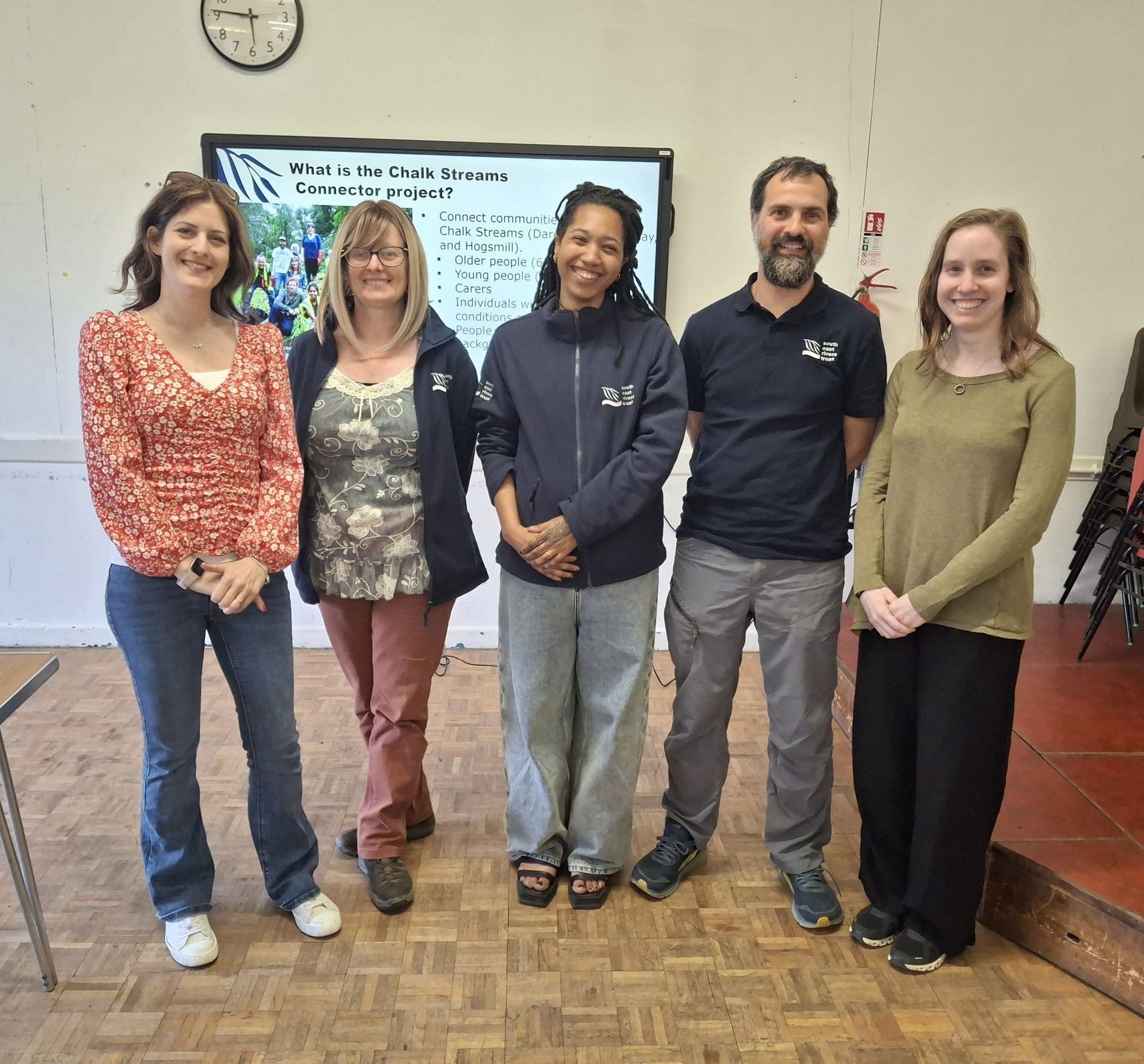
19 April: River Darent Gathering, Dartford
The South East Rivers Trust hosted the River Darent Gathering at the Healthy Living Centre in Dartford organized around the launch of their Chalk Stream Connectors program. The initiative aims to build coordination across chalk stream communities and support the conditions under which these exceptional ecosystems can recover and thrive.
I used the gathering to get to know the full range of people who care for the Darent, whether professionally or personally, and met Councillor Laura Edie, who is leading the rights of the river campaign in Dartford.
23 April: DRIPS Annual General Meeting, Otford
The Darent River Preservation Society (DRIPS) held its AGM in Otford with two substantial presentations. The first covered the Geopark Transmanche, a cross-channel geopark recognizing the shared chalk geology connecting Kent and northern France. It is a quietly remarkable act of bioregional organizing with shared geological heritage serving as the basis for collaboration across political boundaries. The chalk does not end at Dover, and neither should the communities that have grown from it.
The second presentation, by Paul Powlesland, founder of Lawyers for Nature, offered a different kind of inspiration. He described how he and a community of neighbors directly restored the river where he lives when institutions were unable or unwilling to act. His message is simple and radical. You do not need institutional permission to care for a living system. You need knowledge, a willing community, and the conviction to act.
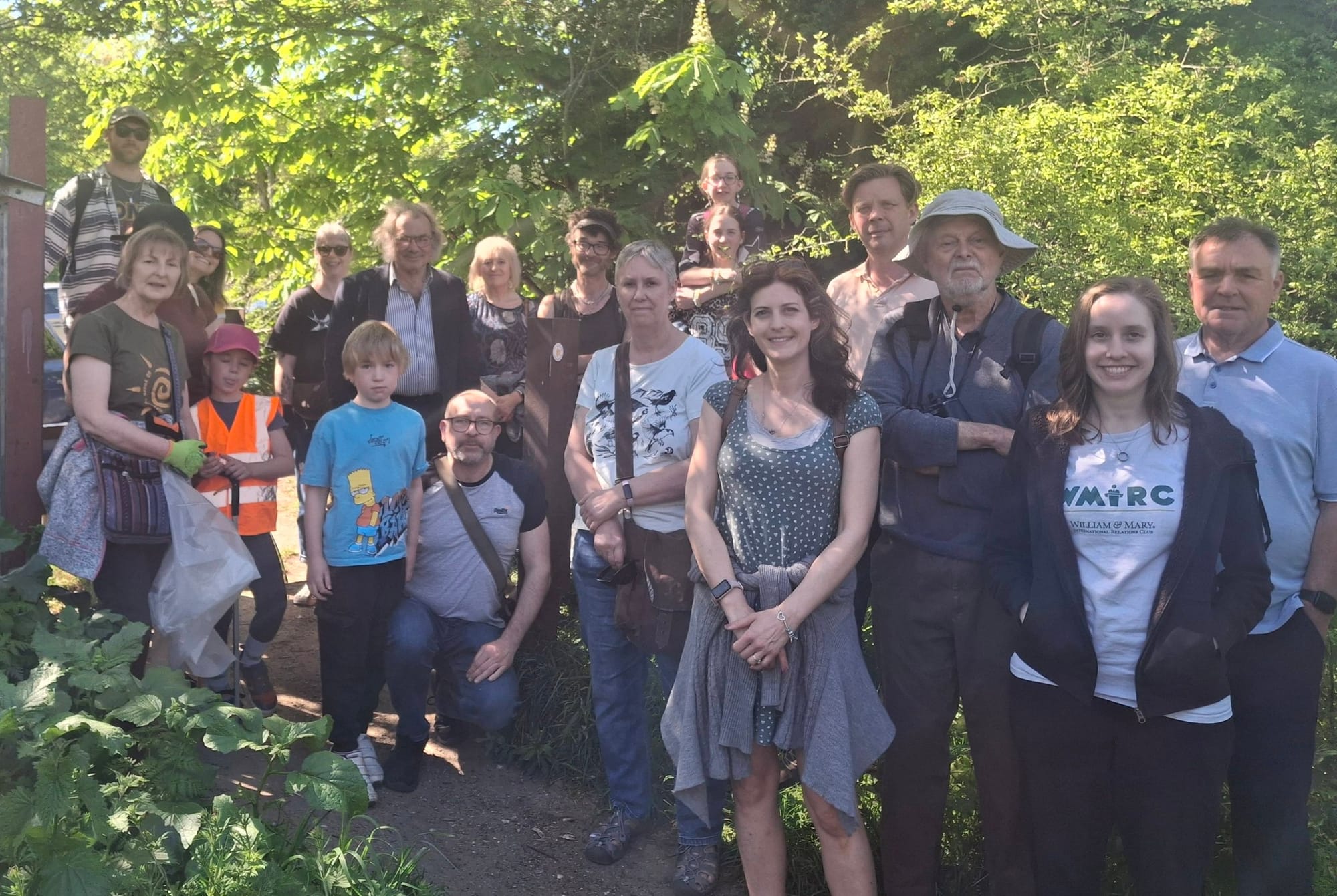
25 April: Big River Watch, Dartford
Councillor Edie organized a walk along the Dartford section of the Darent as part of the national Big River Watch citizen science campaign. The morning involved wildlife surveying, pollution mapping, and litter picking alongside a cross-section of local residents, environmental professionals, and activists, including Friends of the Earth.
Toward a Chalk Streams and Rivers Festival
One development emerging from this web of connections is a prospective Chalk Streams and Rivers Festival, provisionally planned for 25 August at The Quadrangle in Shoreham, Kent. The ambition is a full-day community event oriented around chalk stream ecology and culture, drawing together DRIPS, the South East Rivers Trust, Living Thames, the Cross-Channel Geopark, and voices from the wider chalk landscape. Artist and musician Helena Day is writing her next album about chalk streams and has expressed interest in performing. Culture matters in bioregioning. Music and story are how a place comes alive for people who have not yet learned to read its geology.
Commons in Sevenoaks: Two Parallel Threads
In the background of the river work, two related strands have been developing around the question of commons and community assets in Sevenoaks.
The Community Land Trust
I have been deepening my research into the Community Land Trust (CLT) model as a mechanism for taking land and property out of speculative markets and into lasting community stewardship. Civic Square in Birmingham and Hastings Commons have been the primary case studies. Both demonstrate what it looks like when a community secures permanent, democratic control over the assets it depends on.
The case for a CLT in Sevenoaks has multiple drivers. High street tenancy turnover is significant, fueled by rents that overwhelm independent businesses before they can take root. There is genuine community appetite for a high street that reflects local need rather than market prediction.
The second driver is more urgent. Sevenoaks District Council is being dissolved under local government reorganization, its remit absorbed into a new unitary authority covering a substantially larger area. Sevenoaks Town Council has requested that assets currently held by the District Council and located within the town be transferred to the Town Council, on the straightforward grounds that local assets should be governed by those with the most direct stake in their outcomes. The District Council has declined, with the exception of the Shambles. Local mainstays like the Stag Theatre, Hollybush Recreation Ground, and the High Street Market will therefore pass to a new authority with a large and diffuse portfolio, which may or may not prioritize their community function.
A CLT offers an alternative path should the future unitary authority decide to put the assets on the market. How the assets would be acquired remains an open question, but the CLT model offers a proven governance structure for holding them in community hands once secured. Rather than competing with either tier of local government, it could work in partnership with both, providing the legal and governance infrastructure to permanently steward assets in the public interest regardless of what happens to the administrative boundaries above them.
Town councillors have expressed interest in collaborating on this project, including the possibility of a buyback campaign for high street properties. Nothing is formally planned, but the orientation is shared.
Community Energy
The Sevenoaks Climate Action Network Energy Group launched its first in-person meeting on 8 April at the Samuel Palmer pub in Shoreham, convening around the prospect of a community-owned energy project in Sevenoaks. There is significant potential to scale the project across the Darent Valley and organize bioregionally instead of limiting the scope to the town boundary.
Community energy has genuine momentum across the UK. At both the Sevenoaks Climate Fair on 2 May and the Kent Sustainable Communities Network in-person meeting in Maidstone, the number of active community energy organizations was striking. It is arguably the most accessible entry point for local people who want to act on the climate and energy transition beyond symbolic gestures, and its participatory logic maps naturally onto the commons-based governance framework developing across the rest of this work.
If you live in or near Sevenoaks and are interested in joining this community energy project, do get in touch.
Upcoming Events
5 May: Business Modeling for Uncertainty and Volatility (online)
Evolutesix co-founder Graham Boyd is hosting a live Zoom session on financial modeling that integrates volatility directly into business and investment scenarios. This approach emphasizes how changing conditions, timing, and strategic choices affect survival, resilience, and long-term outcomes across ventures and portfolios. The session will include live simulations on startup and investment scenarios and is particularly relevant for anyone allocating resources in conditions of systemic uncertainty. Register here.
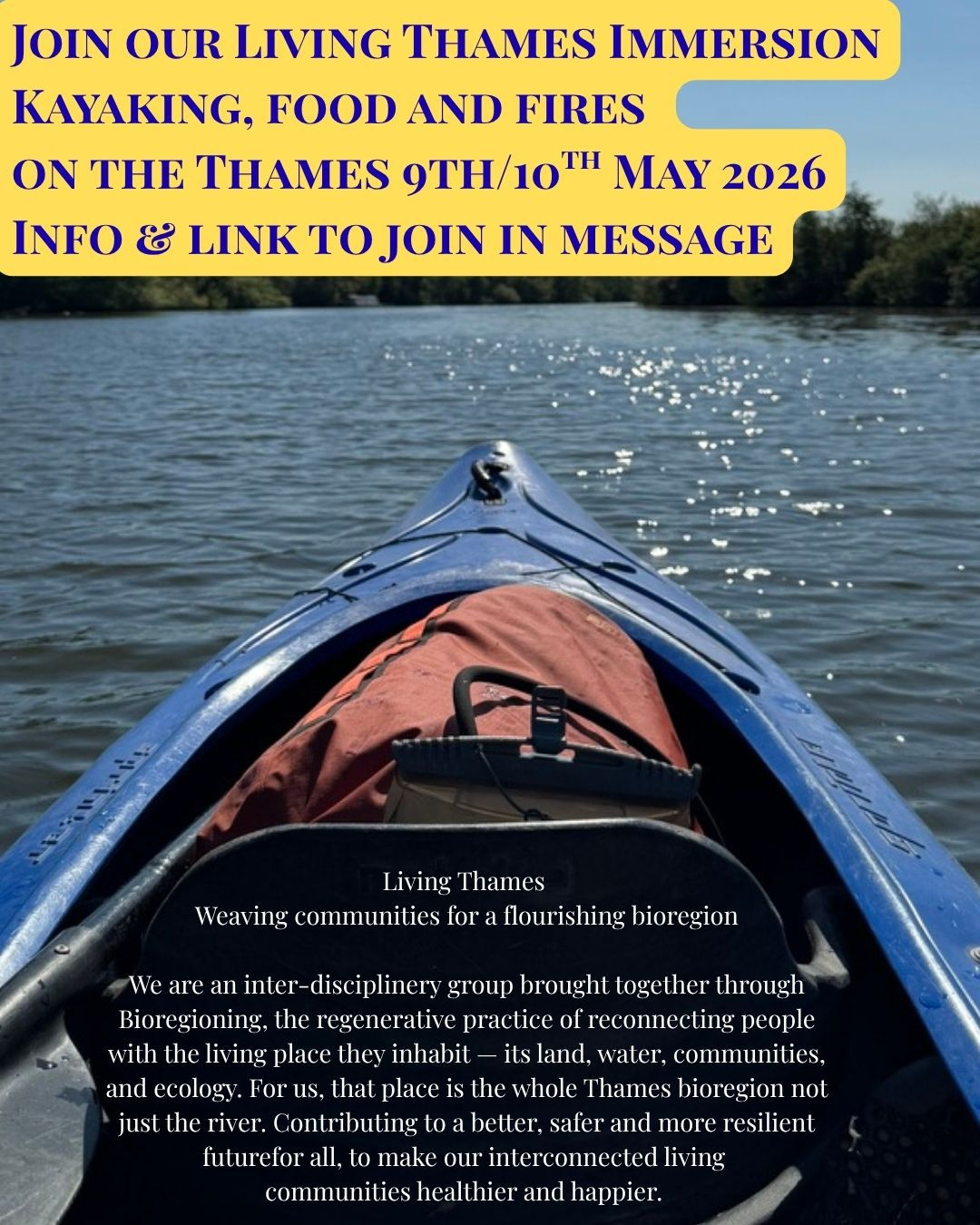
9–10 May: Living Thames Bioregional Immersion
Living Thames is running a two-day kayaking immersion from Marlow to Windsor with overnight camping. The intention is community weaving and connection with our more-than-human kin through direct encounter with the Thames bioregion. Sign up here as soon as possible if you would like to join.
Throughout May: Kairos at Tottenham Court Road, London
Kairos is a central London space for radical ideas about social and cultural change in response to the climate and nature crises. It is leaving its Tottenham Court Road venue at the end of May, and its final weeks host a genuinely strong program spanning commons and economic alternatives, AI and technological refusal, the intelligence of living systems, and the politics of inner work. If you are in or around London, sign up for one of these events before the space closes with a leaving party on 30 May.
Support This Work
Much of what is documented here, including sensemaking, critique, convening, and relationship-building across scales, does not produce conventional deliverables. It produces the conditions under which genuine systems change becomes possible. This substrate is difficult to fund through standard mechanisms, which is why portfolio patronage matters.
If this inquiry resonates and you want to sustain its continuity, you can subscribe to this monthly blog or make a one-time contribution. Both go directly toward maintaining the freedom of movement this work requires.
Updates are published monthly. The purpose is documentation, not content production. The work comes first.
If any of this intersects with your own professional or personal experience, connect with me via email or LinkedIn.