Portfolio Update: 3 April 2026
This post documents the past month of work across my portfolio. It is not content for its own sake, but a record of what is actually happening, offered to those supporting or following this inquiry.
Critiquing Sevenoaks Town Plans
One of the most concrete threads of this period has been developing a systemic, regenerative, and bioregional critique of the Sevenoaks Town Neighbourhood Plan. Following the annual town meeting on 9 March, town councillors indicated that this plan, as well as the Community Investment Plan and the Green Investment Plan, are due for revision within the next year. Several councillors have expressed interest in contributing regenerative objectives to these revisions.
Both the critique and a companion community guide are currently in draft. They are not finished documents produced by a single author, but living work intended to be sharpened, contested, and enriched by the people who know this town best. What follows is a sense of where the analysis currently stands.
The critique is being organized around five structural areas of concern, each pointing toward a corresponding transformation.
- From land-as-commodity to land-as-commons: The plan treats land primarily as a commodity, oriented toward ownership and transaction. The regenerative alternative proposes a Community Land Trust and a network of ecological commons to steward land for current and future generations rather than for speculative value.
- From regulatory to generative logic: Planning policies overwhelmingly protect and resist rather than imagine contextually-aligned forms of generative commons. The default must shift from restriction to invitation, replacing defensive policies with institutional forms that actively enable new arrangements.
- From sectoral to systemic framing: Housing, transport, heritage, and economy are addressed as separate themes rather than entangled living systems. Dissolving these silos into an integrated model means mapping and acting on their interdependencies rather than managing them in isolation.
- From human-centric to more-than-human governance: Biodiversity and landscape appear instrumentally, as assets to be managed rather than sovereign systems with their own rights and logic. A More-Than-Human Council and Rights of Nature frameworks could give formal institutional voice to the Knole woodland, the Darent chalk streams, and the Greensand ecology.
- From a 20-year plan to a 200-year covenant: The current planning window is structurally inadequate for ecological, social, and climatic dynamics that compound over 50 to 200-year timescales. A Long-Term Stewardship Council with a mandate to act as trustee for future generations and non-human life would hold that longer horizon.
These drafts are not addressed to councillors alone. The critique is open for contributions from residents, community organisations, and anyone in the broader network who wants to engage with the analysis, dispute its framing, or add dimensions it has missed.
The companion guide is aimed directly at residents. It is a practical roadmap for civic stewards exploring how to begin acting on this vision without waiting for institutional permission. It too is a draft, and its seven entry points are starting proposals rather than settled conclusions.
- Living landscapes: Form a bioregional monitoring group to track ecological health across the Greensand Ridge and Darent Valley (water quality, tree canopy, species counts, soil health) and make the data publicly available.
- Land stewardship: Explore the Community Land Trust model as a mechanism for permanently decoupling housing from speculative markets, beginning with a public meeting and a Land Ownership and Opportunity Audit.
- Energy commons: Map the existing landscape of solar capacity and fuel poverty, then develop a feasibility study for a community-owned energy cooperative and explore Green Retrofit Bonds to finance whole-street retrofits.
- Food systems: Map who grows what and where, then build direct connections between local producers and eaters through a Sevenoaks Food Assembly, working toward a full food system strategy for the town.
- Civic commons: Host genuine public dialogues using Open Space or World Café formats, and propose a Citizens' Assembly pilot to the Town Council on a live question such as the Greatness quarry site or the energy transition.
- Cultural roots: Launch a living heritage project to gather oral histories, ecological knowledge, and community memory, and work toward an annual Sevenoaks Bioregional Festival rooted in the ecology and culture of the place.
- Metabolic mapping: Convene a working group to begin a Sevenoaks Doughnut Economy Baseline Study in partnership with local institutions, producing the first annual State of the Place report in plain, publicly accessible language.
The guidance running through all seven entry points is the same. Start with what you have, build visible results, and let those results do the persuading. The Town Council is not an adversary in this framing, but a potential partner that needs to see the vision producing tangible outcomes before committing to it formally.
If you live in Sevenoaks and any of this resonates, or if you would like to contribute to this co-creation, I want to hear from you. The work itself depends on the knowledge and energy of people already rooted in this place. Reach out via email or stop by the Sevenoaks Climate Fair on 2 May (see below) for an in-person conversation.
Similar critiques of the Community Investment Plan and Green Investment Plan are also underway and will inform and further develop the community guide.
Launching the Wealden Bioregional Learning Hub
On 28 March, Rob Simpson and I launched the Wealden Bioregional Learning Hub at the Southeast Climate Alliance Annual Gathering. This emerging community is oriented around learning and co-organizing for the regeneration of the Wealden bioregion.
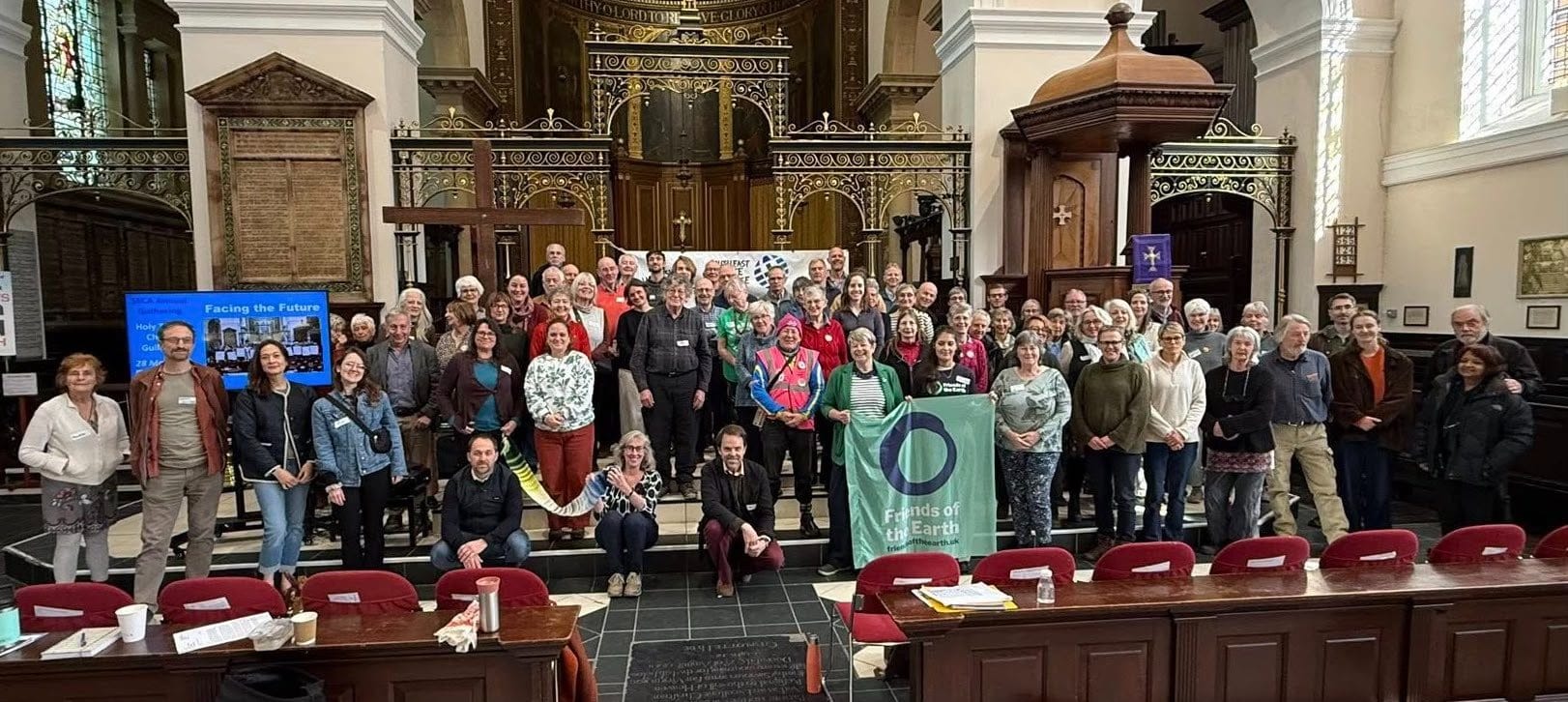
I moderated a full discussion table on bioregioning at the event. Many attendees were encountering the concept for the first time and brought genuinely good questions. All who expressed interest have been added to a nascent WhatsApp group, which is where the community is presently taking shape.
The Weald encompasses the High Weald, Low Weald, and the Greensand Ridge, which is where Sevenoaks sits. Anyone living within this region, or working on a bioregion with meaningful overlap, is welcome to join. As the community grows, we will do deeper sensemaking together to determine how we want to orient and what we want to accomplish.
This launch also crystallized a broader strategic orientation for how I organize my work across the bioregional portfolio. From a hydrological perspective, I am focusing on the Darent Valley catchment, as the river that flows through Sevenoaks, as well as the broader Thames catchment, which it feeds into. Bioregional Thames, recently rebranded as Living Thames, holds the wider frame. From a geological perspective, I am focusing on the Greensand Ridge as a distinct eco-region within the Weald, and exploring what substantive bioregional organizing around that specific context might look like. The Greensand Ridge and the Darent Valley are the primary scales, nested within the broader Wealden Bioregion and the Thames system respectively.
Resources Worth Sharing
Dictionary of Radical Alternatives: A collaborative glossary of concepts, frameworks, and proposals that sit outside mainstream political and economic common sense. Useful for people navigating the language of systems change and regeneration, both for their own orientation and for translating across contexts.
Regenerative Evaluation Living Paper: A working document exploring how to evaluate whether work is genuinely regenerative, as opposed to merely sustainable or extractive. Particularly valuable for community-led initiatives that generate long-term value invisible to conventional metrics. I am already integrating its criteria into the planning critiques.
Upcoming Events
UN RE:Generation Collective Festival (22–26 April): The RE:Generation Collective is a global community bridging regenerative wisdom and the UN system, bringing together current and former staff, diplomats, and experts to co-create institutions that are genuinely life-supporting rather than merely life-managing. The festival marks one year of the Collective's emergence and will explore how planetary governance can evolve toward decolonial, life-centered systems, share regenerative and indigenous practices already working on the ground, and activate the community as an ongoing space for coordinated action. The festival is open to all, so if this area of work interests you, register via the event page.
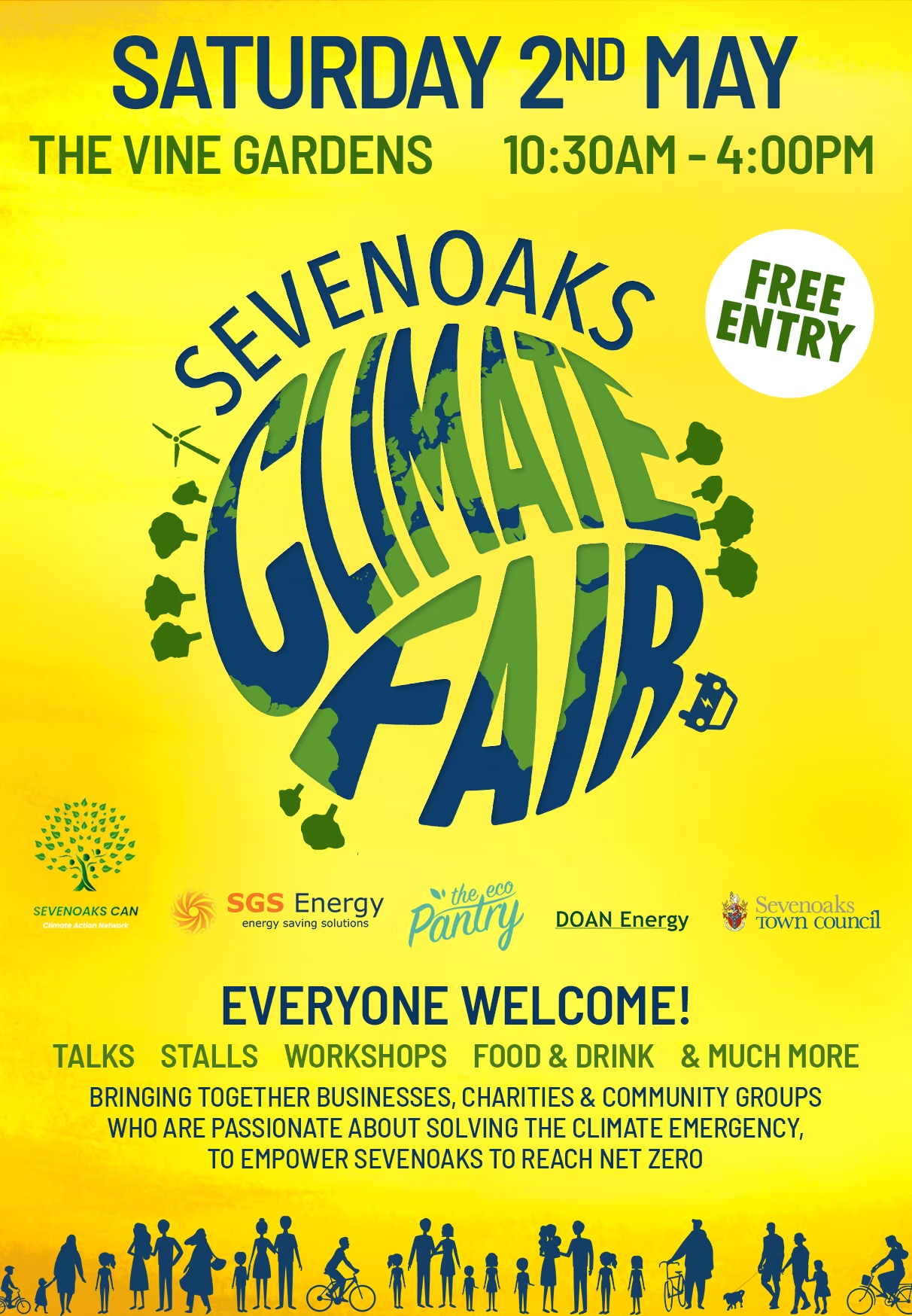
Sevenoaks Climate Fair (2 May): I am co-hosting this event as part of Sevenoaks Climate Action Network. Taking place at The Vine Gardens from 10:30 to 16:00, the fair brings together local businesses, charities, and community groups working on the climate and nature crisis, with talks, workshops, stalls, and food. My intention is to use it as a sensemaking opportunity, not only a showcase of existing initiatives, but a provocation for the community to see climate and ecological breakdown systemically rather than through the narrower lens of carbon accounting. Entry is free, and everyone is welcome. If you live in or around Sevenoaks and are looking for ways to engage directly with what is unfolding, I encourage you to attend.
Victoria Forum London Roundtable (16 April): I will be attending the Victoria Forum 2026 London Roundtable at the Aga Khan Centre in London, running 12:00–14:00. The session, titled From Projects to Systems: The Future of Philanthropy and Systems Innovation Finance, brings together invited guests to explore whether philanthropy is ready to shift from fragmented, short-term grant-making toward systemic intervention. The discussion draws on work from the Public Banking Project, Metabolic, TransCap Initiative, Dark Matter Labs, and the FEST network, with a focus on the emerging field of systems innovation finance. Given the deep overlap with FEST and the broader financing thread of my portfolio, this is a timely conversation for me to join. RSVP to mgr@victoriaforum.ca before 8 April if you would like to attend.
Kent Sustainable Communities Network (22 April) I will be at the Kent SCN one-year anniversary in-person gathering at County Hall in Maidstone, 13:30–17:00, organized by the Kent County Council Energy and Adaptation Team. The event brings together community groups from across Kent working on sustainability and ecological initiatives, with subject matter experts, networking, and discussion of ongoing projects. While this is an invitation-only event for SCN members and select community groups, it is particularly relevant for bioregional organizing across the Weald and the North Downs. If you are based in the area and involved in community sustainability work, do consider joining the network.
Worth Following
Design School for Regenerating Earth: Their 2026 learning journey began 17 March with the theme Regenerating the Earth Through Collapse. The Design School's aim is to build a planetary network of bioregions, connecting communities doing practical organizing across scales to enable shared learning, shared funding, and genuine co-creation. It is not a lecture series, but a co-organizing space. The journey runs six months through the spring and summer. The first two webinars are easy to catch up on, and the community is well-integrated and substantive. As a regular participant, I highly recommend joining if you are working at the bioregional scale and want connection beyond your immediate context.
Support This Work
Much of what is documented here, including sensemaking, critique, convening, and relationship-building across scales, does not produce conventional deliverables. It produces the conditions under which genuine systems change becomes possible. This substrate is difficult to fund through standard mechanisms, which is why portfolio patronage matters.
If this inquiry resonates and you want to sustain its continuity, you can subscribe to this monthly blog or make a one-time contribution. Both go directly toward maintaining the freedom of movement this work requires.
Updates are published monthly. The purpose is documentation, not content production. The work comes first.
If any of this intersects with your own professional or personal experience, connect with me via email or LinkedIn.