[GENERAL AUDIENCE VERSION] Portfolio Update: 06/08/2026
*Please note this post was adapted for general audience accessibility. The original version containing more technical language and frameworks can be found here.
This post covers the past month of my work. It is not written for its own sake. It is a record of what actually happened, shared with the people who support or follow this work. I welcome corrections, additions, and disagreement from anyone working in this space.
Addressing National Housing Targets
Sevenoaks District Council now has to plan for 17,460 new homes, a number the national government raised by 63% with no local vote on the increase. Meeting it likely means building on Green Belt land, including Pedham Place, a site inside both the Green Belt and the protected Kent Downs landscape. Protests broke out across Sevenoaks in late June and early July over this. Residents organizing under groups such as Protect Our Green Belt Together raised real concerns about water shortages, drought, and infrastructure that already struggles to keep up.
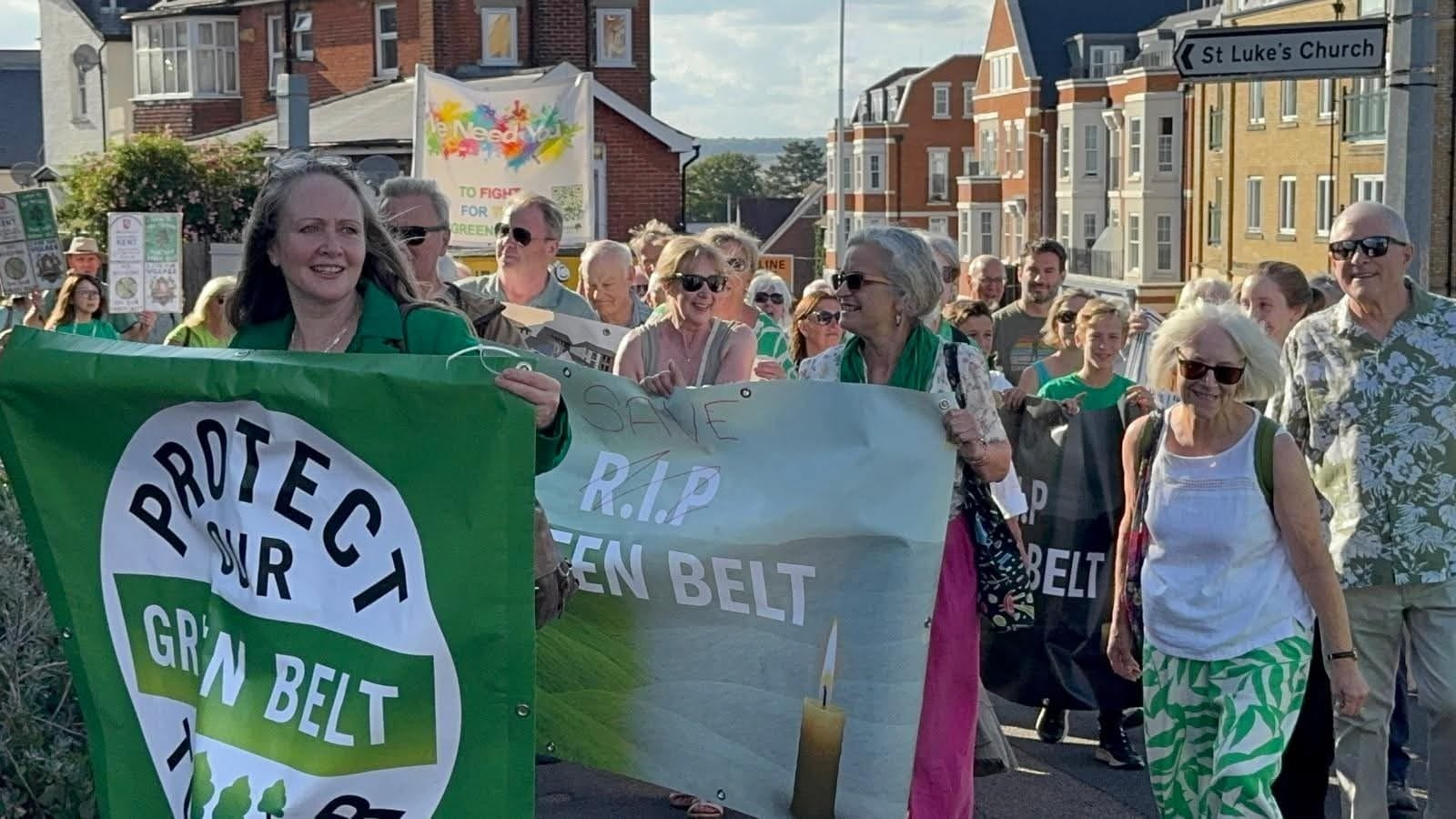
This is not a new pattern. A number gets set somewhere else, and a district has to absorb it, but underneath this fight over housing sits a different question worth asking directly. Who actually gets to decide what happens to the land here, and can that decision ever be taken out of the hands of distant targets and speculative buyers for good?
On 2 and 3 July, I traveled to Hastings to learn from Hastings Commons, an organization that has done exactly that. It moved twelve buildings out of the open property market and into permanent community ownership. They use a structure called a community land trust, which is a legal tool that holds land so a community keeps control of it, instead of the highest bidder.
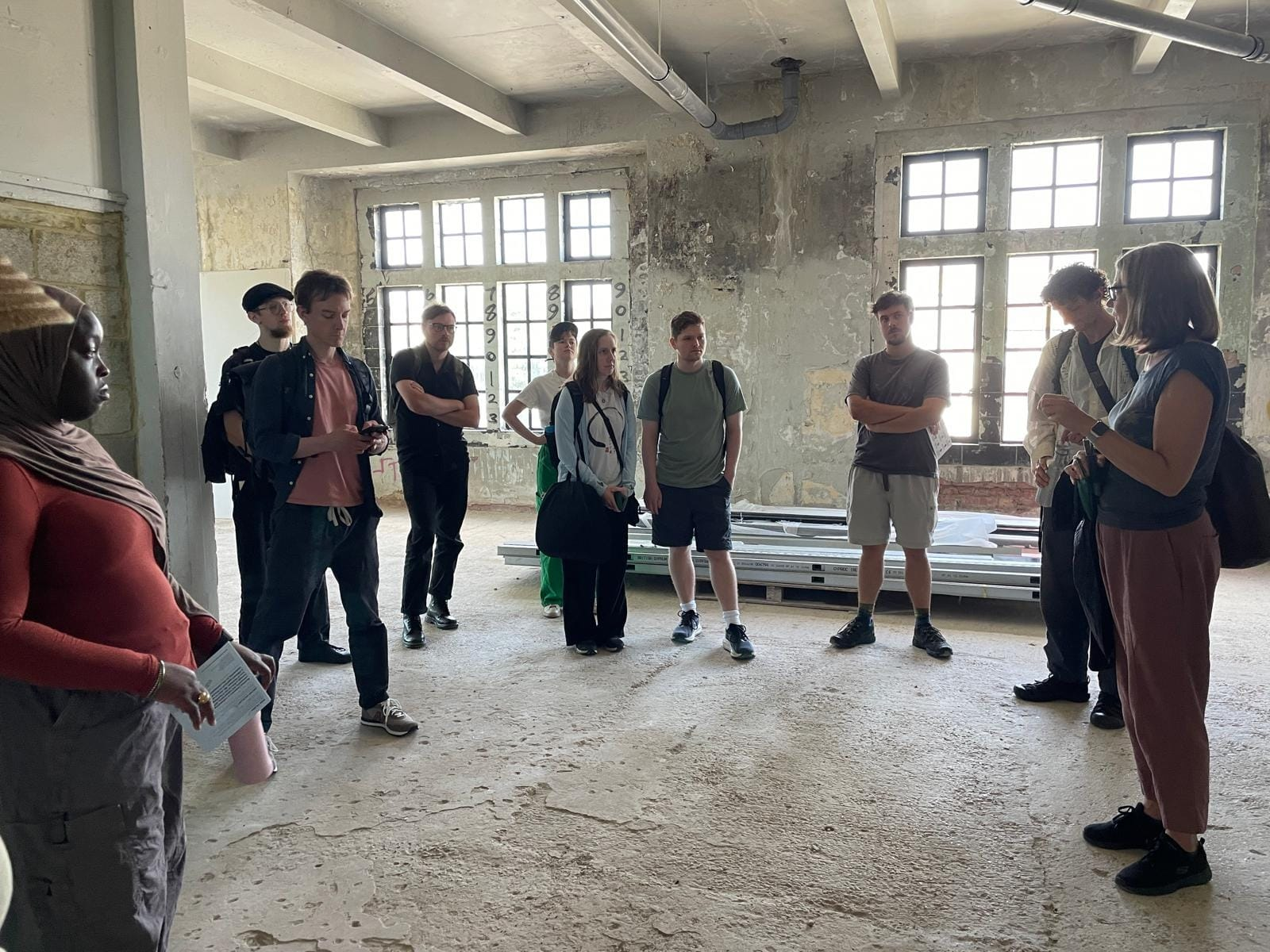
Hastings Commons operates within one town, but the question I am sitting with is whether the same tool could hold farmland and riverside land across the whole Darent Valley, under long-term leases with real environmental protections built in. The land would be permanently off the table for speculation regardless of what any council or government decides next.
This is early, unfinished thinking, not a settled plan, but it now sits alongside the direct objection work already underway against the council's housing plan itself.
Who Speaks for the River
I attended two events this month on river rights, one in London and one in Aylesford, and met people taking on the role of river guardian. River guardians act, formally or informally, to protect a river and push councils to actually enforce rights they have acknowledged on paper but rarely defended in practice.
Owning land and caring for a river turn out to depend on each other more than either side usually admits. A guardian with no land to attach conditions to has little to enforce. A council that recognizes a river's rights but names no one to act on them has made a promise with no teeth. One advocate, Paul Powlesland, has shown that a guardian can act without owning any land at all, through legal action and public pressure. However, a condition written into a long-term community land lease gives that guardian an obligation that takes effect the moment the lease is signed, not one that depends on a court agreeing to stretch existing law.
Put plainly, land held by the community and a river defended by the community are not two separate projects. They are the same project, approached from two directions.
A Different Kind of Alliance
Organizations I work with are also considering who should hold responsibility, and where.
The South East Climate Alliance has spent years lobbying local councils and national government across Kent, Sussex, Surrey, and Hampshire. Local climate groups now handle much of that work on the ground, and the Alliance's leadership has started asking what it is actually for anymore. My colleague Rob Simpson and I think the answer is right in front of them. The Alliance's four-county area lines up almost exactly with the Wealden Dome, the ancient chalk landscape whose slow erosion carved the Weald and fed the springs that feed the Darent and its neighboring streams. Instead of managing its own decline, the Alliance could help new, independent local groups get started, organized around this actual landscape rather than a council boundary drawn for administrative convenience. We tested this idea already, at the Alliance's own gathering on 28/03/2026, and it landed. An alliance built around one problem fades once that problem moves. An alliance built around a real, shared place does not.
Neither the land trust, the river guardianship, nor the Alliance's shift, is being handed down from above. I am working out with local people who should hold which piece of this, at what scale, so that responsibility sits with the people who actually live with the consequences rather than with whoever happens to have the authority on paper. I am not proposing a plan for anyone else to follow. I am building my own map of who to talk to and what to push for next, and I expect to keep changing it as I learn from people already doing this work.
Upcoming Events
Over the next few months, most of my time will go toward preparing for these three events.
Chalk Rivers Festival, 25/08/2026, Shoreham: I am co-organizing this free event at the Quadrangle with my colleague Sarah Newman from the Shoreham Midsummer Festival, alongside Living Thames, the Darent River Preservation Society, the South East Rivers Trust, the Darent Nature Partnership, the Darent Valley Farm Cluster, and Kent Wildlife Trust. The day honors the memory of Mark Lintell. In the afternoon, the Quadrangle hosts creative workshops, including a print workshop using recycled tetrapak, a willow workshop for making river figures, a group song session, a clay "Dream River" project, and a quiet listening session in which a small group reflects on what the River Darent itself might need from its human community. In the evening, the festival shifts to music, drinks, and speakers focused on the future of chalk rivers and the people who care for them. Proceeds support restoration work on the Darent. Learn more and register here.
Sevenoaks Imagines test gathering, late September, Sevenoaks: I am organizing this alongside Theo Silberston of Shared Horizon and Phelim McDermott of Devoted and Disgruntled. Together, we are planning a small trial with thirty residents or fewer, for one half-day session, to test an open discussion format in Sevenoaks and surface topics for something bigger. Timing depends on Phelim finishing his run of Tao of Glass, his collaboration with Philip Glass now playing in the West End through 12/09, which I recently saw and recommend without hesitation. What we learn from this smaller trial will shape a full town-wide event planned for winter, likely spanning two days, open to any Sevenoaks resident willing to imagine a better future and help decide what to do about it.
Living Thames Bioregional Convergence, 16–17/10/2026, Pangbourne: As a core team member of Living Thames, I am helping launch a new learning center for people already working to protect and restore the Thames catchment, and for anyone who wants to start. It will take place across two riverside venues near where the Thames first emerges, between the Chilterns and the North Wessex Downs. Joe Brewer and Penny Heiple of the Design School for Regenerating Earth will join at the end of a journey across North Africa, North America, and Europe, sharing their vision for a thousand community-led learning centers like this one worldwide. Anyone interested is welcome to sign up here.
Also worth noting:
Bioregion East Kent Gathering, 11/09/2026, Canterbury: This event launches a similar effort in East Kent, built around the Stour river catchment. I am attending to meet the people building it and learn how they plan to fund this kind of work at a real, local scale, something they have flagged as a priority and one I want to see in practice.
If you live in the Weald, the Darent Valley, or anywhere these threads touch, I want to hear from you. Reach out by email or find me at any of the gatherings above.
Support This Work
Much of what this update describes, thinking things through, offering honest critique, connecting people, and building relationships across a landscape that does not follow council lines, does not produce the kind of deliverables a typical project does. It creates the conditions that make real, lasting change possible, the kind that starts with who holds the land and who speaks for the river, not with waiting for permission from a target set somewhere else. This kind of work is hard to fund through standard grants or contracts, which is why ongoing support matters.
If this work resonates with you and you want to help sustain it, you can subscribe to this monthly update or make a one-time contribution. Both go directly toward maintaining the freedom of movement this role requires.
Updates come out monthly. The goal is documentation, not content for its own sake. The work comes first.
If any of this connects to your own professional or personal experience, reach out by email.